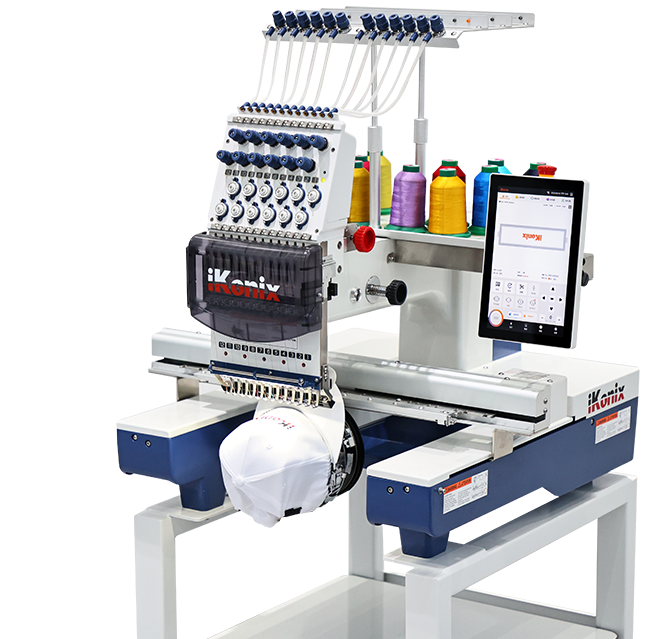
The core advantage of single-head machines is "flexibility and control." They don’t take up much space, have a low operation threshold, and can accurately meet the needs of multi-style, small-batch embroidery—no extra investment in "unused heads" required.
Fast style changes: When switching embroidery patterns or fabrics, there’s no need to adjust multiple heads simultaneously. Just load a new pattern file and make simple parameter adjustments to start. For example, switching from embroidering canvas bags to notebook covers can be done in a few minutes.
Suitable for small formats: Better for embroidering small items (e.g., keychains, bookmarks, small clothing logos). It positions accurately during embroidery and is less likely to have errors due to multi-head synchronization issues.
Cost-friendly: Lower purchase cost compared to multi-head machines, takes up less space (no need for a dedicated large area), and daily maintenance only requires caring for one head. It also uses less consumables (embroidery threads, needles).
Individuals/studios: For cultural and creative DIY, small-batch customization (e.g., name tags, personalized gifts), or developing multi-style trial productions (small quantities per style, frequent style changes).
Small and medium-sized garment factories: Undertaking "single-point embroidery" orders such as clothing logos and cuff patterns—many order types but not large quantities per style.
Beginners: Ideal for those new to embroidery machines. Use a single-head machine to familiarize yourself with the operation process, reduce learning difficulty, and upgrade equipment later when needs grow.
The core value of multi-head machines is "batch output." Multiple heads can embroider the same pattern simultaneously, greatly improving production efficiency. They’re suitable for scenarios with stable orders and large quantities per style, helping quickly spread out production costs.
High efficiency: Multiple heads work at the same time. For example, when embroidering the same style of canvas bag, multi-head machines can finish multiple products at once without frequent start-stop operations.
Suitable for standardized production: Ideal for long-term embroidery of fixed patterns (e.g., batch school uniform embroidery, home textile four-piece set patterns). After adjusting parameters once, all heads output synchronously, ensuring uniform pattern precision and reducing manual intervention.
Requires space planning: Larger in size than single-head machines, so sufficient operating space must be reserved. When changing styles, parameters of all heads need to be calibrated simultaneously—better for "long-term production of one style" rather than "frequent style changes."
Large garment factories/home textile factories: Undertaking bulk orders (e.g., sportswear logos, bedding patterns) with large quantities per style and tight delivery deadlines.
Industrial cluster processing: Such as wedding dress embroidery or towel embroidery clusters, which focus on a single category or fixed patterns for a long time and pursue large-scale production capacity.
Gift OEM factories: Undertaking bulk corporate gift customization (e.g., towels, canvas bags with embroidered logos) with stable orders and fixed styles.
"Are your orders ‘multi-style, small-batch’ or ‘few styles, large-batch’?"
Choose a single-head machine for the former (flexible style changes) and a multi-head machine for the latter (batch efficiency).
"Is your budget or space limited?"
Choose a single-head machine if your budget is tight, space is small, or you’re in the trial production stage; choose a multi-head machine if you have sufficient budget, enough space, and stable orders.
In short, single-head machines are "flexible business assistants," while multi-head machines are "efficient production tools." If you’re still unsure, you can also consult us for targeted advice based on the types of products you usually embroider and your order cycle—avoiding "waste from wrong purchases" or "insufficient production capacity."



 2025-08-21


